
As digital transformation accelerates across industries, identity security has become one of the biggest challenges for businesses worldwide. Traditional authentication methods such as passwords, PINs, security questions, and one-time passwords (OTPs) are no longer sufficient to protect users against sophisticated fraud and cyberattacks. Password fatigue, phishing attacks, SIM swap fraud, and credential stuffing have exposed the weaknesses of legacy verification systems.
To overcome these limitations, organizations are turning to advanced biometric technologies. Among them, voice biometric authentication has emerged as a powerful, secure, and user-friendly identity verification solution. By leveraging the uniqueness of a person’s voice, voice biometrics offers a seamless way to authenticate users while significantly reducing fraud risk.
This in-depth guide explores everything you need to know about voice biometric authentication, including how it works, its benefits, real-world use cases, security measures, compliance considerations, challenges, and future trends.
What Is Voice Biometric Authentication?
Voice biometric authentication is a biometric identity verification method that uses the distinct characteristics of an individual’s voice to confirm their identity. Every person’s voice is shaped by physiological and behavioral factors such as vocal tract length, pitch, tone, accent, rhythm, and speaking patterns. These characteristics make each voice unique, even among identical twins.
A voice biometric system analyzes these attributes to create a voiceprint, which acts as a digital biometric template. Unlike passwords or PINs, a voiceprint cannot be forgotten, guessed, or easily stolen, making voice biometrics a highly secure authentication method.
Why Traditional Authentication Methods Are Failing
Before understanding the value of voice biometrics, it is important to examine why traditional authentication methods are no longer reliable:
Password-Based Authentication
Passwords are vulnerable to phishing, brute-force attacks, and data breaches. Users often reuse weak passwords across multiple platforms, increasing security risks.
OTP and SMS Verification
OTP-based authentication is susceptible to SIM swap fraud, SMS interception, and malware attacks. Delays in OTP delivery also negatively impact user experience.
Knowledge-Based Authentication (KBA)
Security questions such as “mother’s maiden name” or “first school” can often be guessed or found on social media, making them ineffective against fraudsters.
Voice biometric authentication addresses these issues by providing a secure, biometric-based alternative that cannot be easily compromised.
How Voice Biometric Authentication Works
Voice biometric authentication systems follow a multi-step process to ensure accurate and secure identity verification.
1. Voice Enrollment
During enrollment, the user provides a voice sample by speaking a phrase or engaging in natural conversation. This voice data is analyzed to capture unique vocal characteristics.
2. Voiceprint Creation
The system extracts hundreds of acoustic features such as pitch, frequency, formants, and speech dynamics. These features are converted into a mathematical model known as a voiceprint.
3. Secure Storage
The voiceprint is encrypted and securely stored in a database or cloud environment. Raw audio is typically discarded to protect user privacy.
4. Voice Matching
When authentication is required, the user’s live voice sample is compared against the stored voiceprint. A match score is generated to determine identity confirmation.
5. Liveness Detection
Advanced systems include liveness detection to ensure the voice is from a real, live human and not a recording or synthetic voice.
Types of Voice Biometric Authentication
Text-Dependent Voice Biometrics
This method requires users to speak a specific phrase. It is fast, accurate, and commonly used in IVR systems and call centers.
Text-Independent Voice Biometrics
Authentication is performed using natural speech without fixed phrases. This approach is ideal for continuous authentication and omnichannel environments.
Accessibility and Inclusivity Benefits of Voice Biometrics
One of the often-overlooked advantages of voice biometric authentication is its contribution to accessibility and inclusivity. Voice-based verification is especially helpful for elderly users, visually impaired individuals, or users who struggle with complex passwords and PINs. By simply speaking, users can securely access services without technical barriers.
This makes voice biometrics a socially inclusive authentication method that supports a wider range of users while maintaining high security standards.
Key Benefits of Voice Biometric Authentication
1. Superior Security
Voice biometrics relies on biometric traits that are extremely difficult to replicate. Advanced anti-spoofing measures protect against replay and deepfake attacks.
2. Seamless User Experience
Users authenticate naturally by speaking, eliminating the need to remember passwords or answer security questions.
3. Faster Verification
Voice biometric authentication reduces verification time from minutes to seconds, improving operational efficiency.
4. Reduced Fraud and Financial Losses
By preventing impersonation and account takeovers, voice biometrics significantly lowers fraud-related costs.
5. Scalable and Flexible
Voice biometric solutions can scale across millions of users and integrate easily with existing digital platforms.
Voice Biometric Authentication vs Other Biometric Methods
| Biometric Method | Accuracy | User Convenience | Fraud Resistance |
|---|---|---|---|
| Fingerprint | High | Medium | High |
| Face Recognition | High | High | Medium |
| Iris Recognition | Very High | Low | Very High |
| Voice Biometrics | High | Very High | Very High |
Voice biometrics stands out for remote authentication scenarios where physical presence is not required.
Industry Use Cases of Voice Biometric Authentication
Banking and Financial Services
Banks use voice biometrics for customer onboarding, account access, transaction verification, and fraud prevention in call centers.
Call Centers and Customer Support
Voice authentication eliminates lengthy security questions, reducing average handling time and improving customer satisfaction.
Telecom Industry
Telecom providers use voice biometrics to prevent SIM swap fraud and unauthorized account changes.
Healthcare Sector
Healthcare organizations use voice authentication to verify patients securely while ensuring regulatory compliance.
Government and Public Services
Voice biometrics enables secure access to welfare programs, digital IDs, and citizen services.
Enterprise and Workforce Security
Organizations use voice biometrics for remote employee authentication and secure system access.
Role of AI and Machine Learning in Voice Biometrics
Artificial intelligence and machine learning play a crucial role in voice biometric authentication. AI models continuously learn from voice variations caused by aging, illness, or environmental noise. Deep learning also enhances anti-spoofing capabilities by detecting synthetic and manipulated voices.
ntegration of Voice Biometric Authentication with Digital KYC
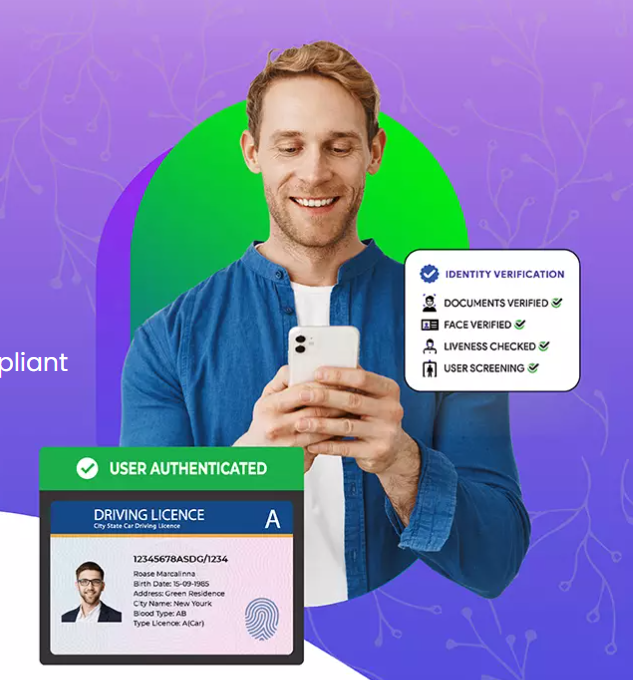
Voice biometric authentication is increasingly being integrated into digital KYC and identity verification workflows. During remote onboarding, voice biometrics adds an additional security layer that confirms the presence of a real user. When combined with document verification, face recognition, and liveness detection, voice biometrics creates a strong, multi-layered identity verification system.
This integration is particularly beneficial for fintech companies and digital banks that operate without physical branches. Voice-based verification ensures compliance while maintaining a smooth onboarding experience, even in low-bandwidth environments where video-based verification may fail.
Voice Spoofing Threats and Anti-Spoofing Technologies
Modern voice biometric systems protect against fraud using:
- Liveness detection
- Replay attack detection
- Synthetic voice and deepfake detection
- Behavioral voice analysis
These measures ensure robust security even against advanced attacks.
Compliance, Privacy, and Data Protection
Voice biometric authentication solutions comply with global regulations such as GDPR, ISO 27001, and SOC 2. Voiceprints are encrypted, anonymized, and stored securely, ensuring user privacy and regulatory compliance.
Challenges and Limitations of Voice Biometric Authentication
Despite its benefits, voice biometrics faces challenges such as background noise, voice changes due to health conditions, and user privacy concerns. Continuous advancements in AI and signal processing are rapidly addressing these issues.
Voice Biometrics in Multi-Factor and Omnichannel Authentication
Voice biometrics works seamlessly with other verification methods such as face recognition, document verification, and liveness detection to create strong multi-factor authentication systems across web, mobile, and IVR channels.
Future Trends in Voice Biometric Authentication
The future of voice biometrics includes continuous authentication, integration with conversational AI, enhanced deepfake detection, and widespread adoption in fintech, healthcare, and government sectors.
Voice Biometrics in Fraud Detection and Risk Management
Voice biometric authentication is not limited to identity verification alone; it also acts as a powerful fraud detection and risk management tool. Advanced voice analytics can detect suspicious behavioral patterns such as unusual speaking pace, stress levels, or inconsistencies in voice characteristics. These signals help organizations flag high-risk interactions in real time.
By combining voice biometrics with AI-driven risk engines, businesses can proactively prevent fraud attempts before financial or reputational damage occurs. This is especially valuable in financial institutions, where voice biometrics can identify known fraudsters across multiple accounts and channels using a single voiceprint.
Voice Biometric Authentication and Customer Experience Transformation
Beyond security, voice biometric authentication plays a critical role in transforming customer experience. In an era where users expect instant access and minimal friction, voice-based authentication removes repetitive and time-consuming verification steps. Instead of answering multiple security questions or waiting for OTPs, users can authenticate naturally by speaking, which significantly improves satisfaction and trust.
For industries like banking, telecom, and insurance, customer experience is a key differentiator. Voice biometrics helps organizations reduce call abandonment rates, improve first-call resolution, and create a more personalized interaction. When customers feel recognized and securely verified, their confidence in the brand increases, leading to higher retention and loyalty.
Why Businesses Should Invest in Voice Biometric Authentication
Organizations that adopt voice biometric authentication gain enhanced security, reduced fraud, improved customer experience, and long-term cost savings. It is a future-ready solution for modern identity verification challenges.
Conclusion
Voice biometric authentication represents the next generation of secure, intelligent, and frictionless identity verification. By replacing weak traditional methods with biometric-based security, businesses can protect users, prevent fraud, and deliver superior digital experiences.
As digital interactions continue to grow, voice biometrics will play a central role in building trust and security across industries.